Loading...
Loading...
Jordan Oakes / AI Product Designer
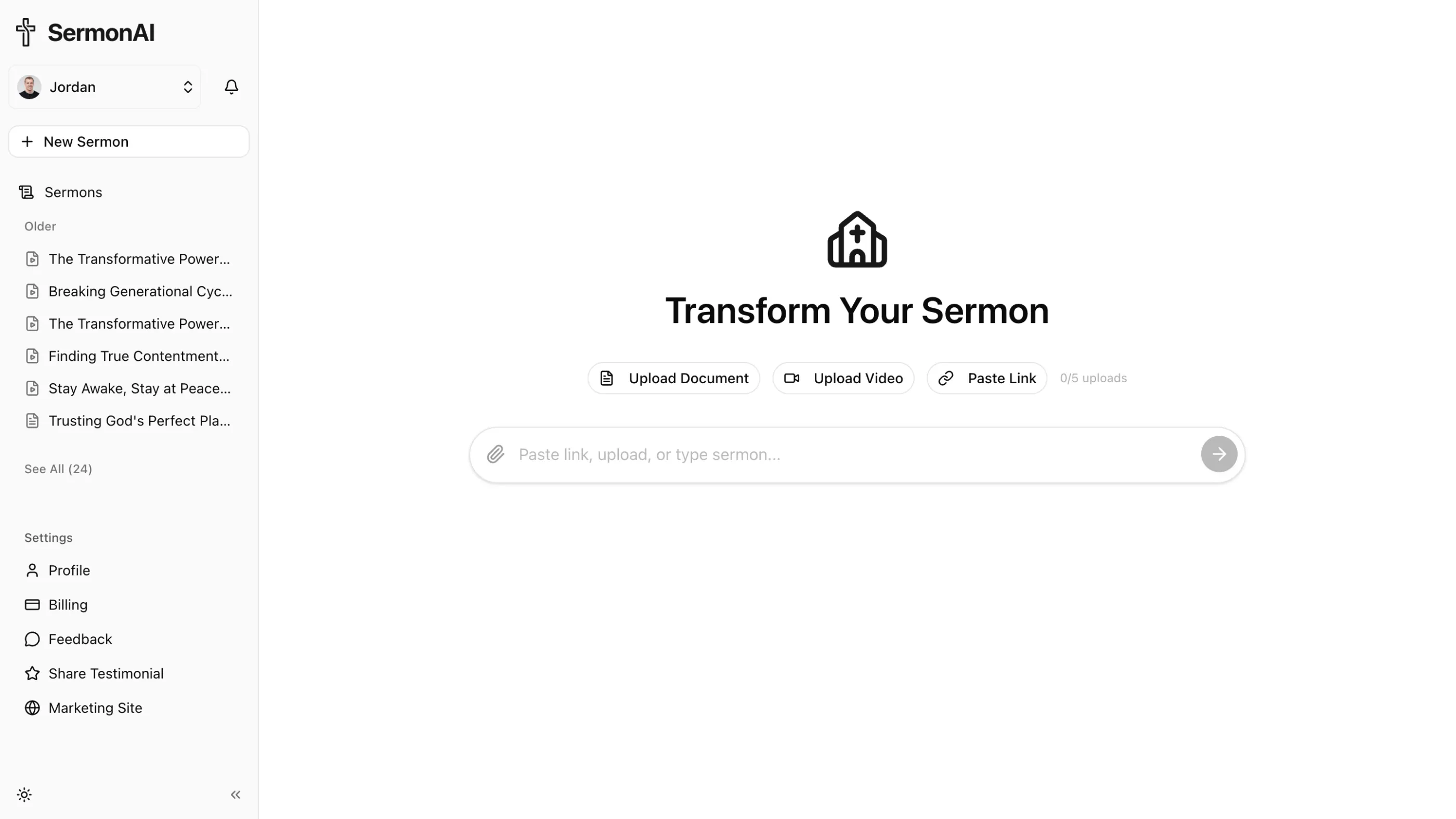
I design and ship AI-native products end to end — as co-founder and CTO of SermonAI, a production AI SaaS. Cognitive Science (AI & HCI, UC Santa Cruz) trained me to start from how people think, not from what the model can do.
Decisions I'll Defend
Separated transcription from generation in SermonAI so the UI could be honest about pipeline progress.
When the AI is doing multiple sequential jobs, combining them into one opaque step erodes trust. Keeping them distinct let the interface show real state — not a spinner lying about how far along we were. Designing a non-deterministic, multi-stage AI workflow means the UI must expose what the system is actually doing.
Designed every SermonAI output to land in a reviewable state first — the AI never publishes without human sign-off.
Automation complacency is a documented HCI failure mode. When users trust AI output without reviewing it, errors compound silently. Building in a mandatory review step isn't friction — it's the design preventing a category of harm specific to tools that generate content in someone else's voice.
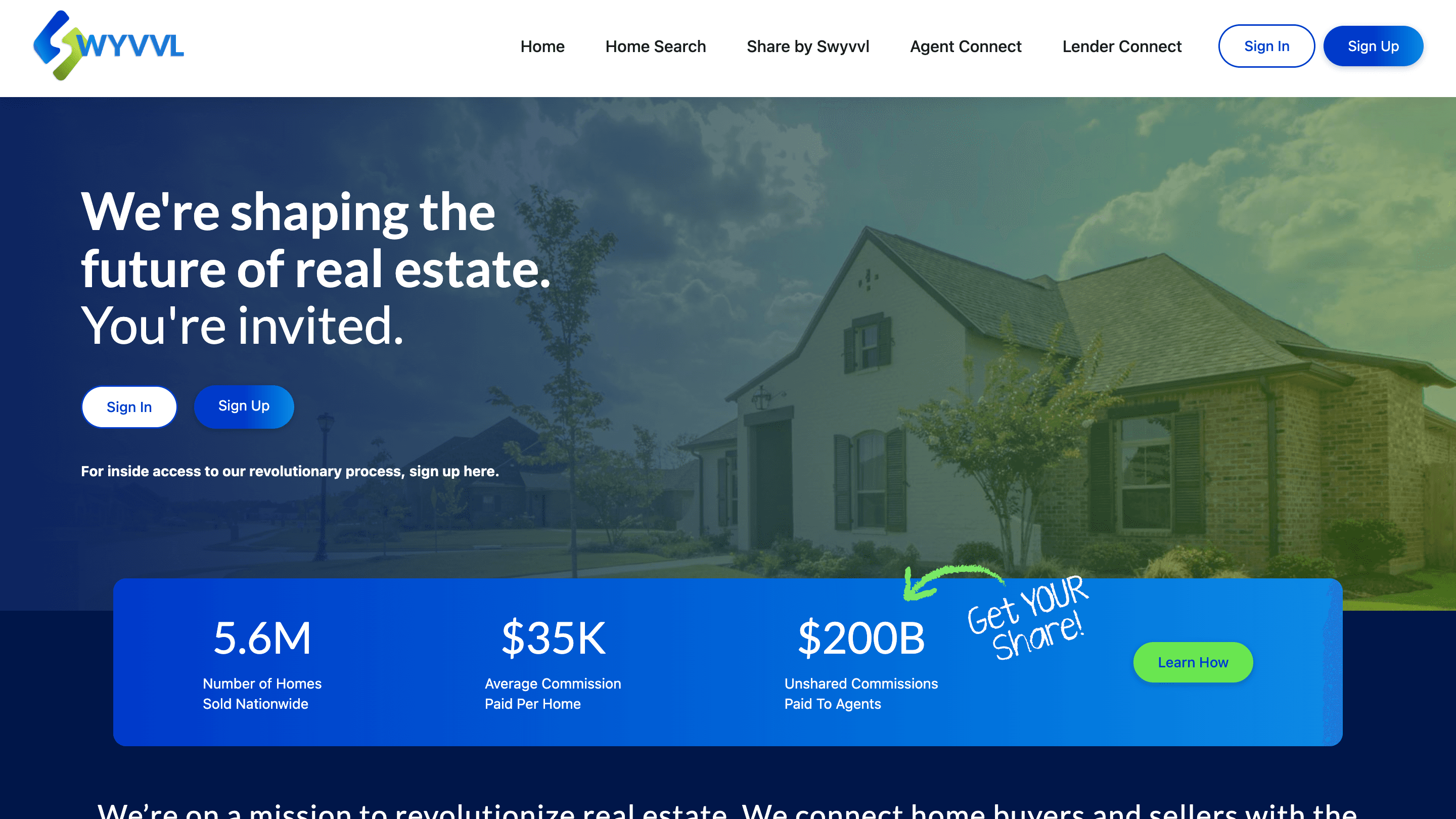
Chose no-code tooling for Swyvvl to validate the product before committing to a custom stack.
Webflow + Xano + Wized was the right call for a pre-revenue product with unproven assumptions. The lesson wasn't that no-code fails — it's knowing exactly where the ceiling is before you hit it, and scoping accordingly.
Built this portfolio in Next.js + Supabase rather than Webflow to demonstrate the same stack I sell.
If I claim I can ship production Next.js AI products, the credibility check is whether I'm willing to build my own tools with that stack. This site — including the retrieval (RAG) pipeline behind the upcoming work-page personalization — is the answer.
About
My Cognitive Science degree (AI & HCI focus, UC Santa Cruz) gave me a specific lens: start from how people actually think and behave, then design and build to match — not the other way around.
A decade of freelance constraints taught me how to design and ship under real pressure without a safety net, for clients ranging from local businesses to funded startups.
SermonAI is where those two threads converge — a live AI SaaS I own end to end, from user research through the transcription pipeline to production deployment.
Let's Work Together
I'm open to full-time AI Product Designer roles and selective consulting. If you need someone who can own both the experience and the engineering — from user research and system design to shipped code — let's talk.
Featured Project
Pastors produce one rich piece of content weekly — a sermon — but manage five downstream formats entirely by hand: summaries, discussion guides, devotionals, blog posts, and verse references. Each one requires preserving their voice under time pressure. The real cost isn't hours spent. It's the quality erosion from context-switching between creation and reformatting.
The defining architectural decision was separating transcription from generation into discrete, visible pipeline stages. A single “processing” spinner across a multi-step AI workflow is a design failure — it hides real system state and erodes trust by lying about progress. Surfacing each stage explicitly let the interface be honest. And every AI output lands in a human-in-the-loop review state — nothing reaches teams without sign-off.
Live SaaS with active ministry team subscribers. Full end-to-end ownership — user research, system architecture, product design, and production deployment.
AI Product Designer & CTO — design, architecture, and delivery

Foundations